
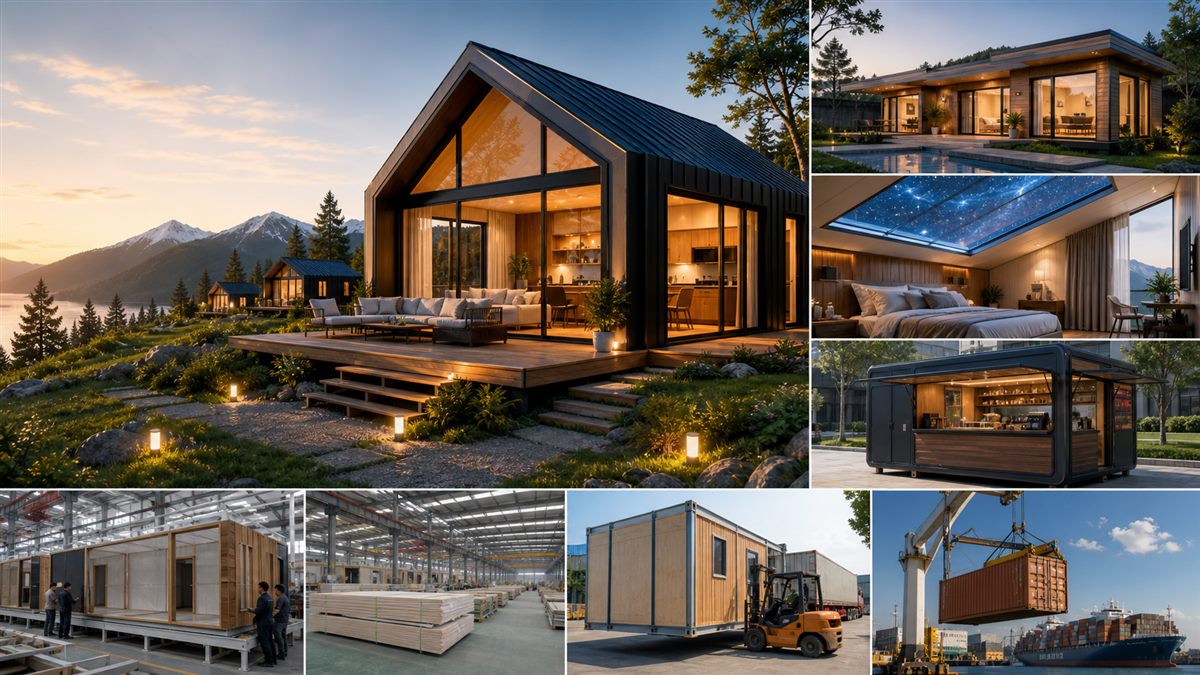
In recent years, villa wooden house design, construction, and export have gained significant popularity across international markets. From luxury eco-resorts to private countryside estates, prefabricated timber villas are becoming a preferred choice due to their sustainability, aesthetic appeal, and fast construction cycle.
This article explores the complete process of villa wooden house design, construction, and export, highlighting key advantages, engineering methods, logistics, and international project considerations.
1. What Is Villa Wooden House Design and Export?
Villa wooden house design and export refers to the integrated process of:
Designing high-end wooden villa structures
Prefabricating components in factories
Transporting them overseas
Assembling them at the destination site
These villas are typically built using engineered timber systems, modular construction technology, or hybrid wood-steel frameworks. They are widely used in:
Resort developments
Luxury vacation homes
Eco-tourism projects
Private countryside villas
2. Advantages of Prefabricated Wooden Villas for Export
2.1 Fast Construction Speed
Most structural components are prefabricated, allowing on-site installation to be completed in weeks instead of months.
2.2 Eco-Friendly and Sustainable
Wood is a renewable material with a lower carbon footprint compared to concrete or steel construction.
2.3 Flexible Architectural Design
Villa wooden houses can be customized in:
Modern minimalist styles
Scandinavian designs
Traditional log cabin aesthetics
Luxury resort villa styles
2.4 Cost Efficiency in International Projects
Prefabrication reduces labor costs overseas and minimizes construction delays caused by weather or local conditions.
3. Design Process of Wooden Villa Export Projects
3.1 Concept and Architectural Planning
The process begins with:
Client requirements analysis
Site conditions evaluation
Architectural concept development
Designers focus on blending aesthetics with structural performance.
3.2 Structural Engineering Design
Engineers develop:
Load-bearing timber structures
Wind and seismic resistance systems
Thermal insulation solutions
Each villa must comply with both local and international building standards.
3.3 Modular Prefabrication Design
The building is divided into transportable modules such as:
Wall panels
Roof systems
Floor structures
Pre-installed utility modules
This ensures efficient overseas transportation and installation.
4. Construction and Factory Prefabrication
4.1 Precision Manufacturing
All components are produced in controlled factory environments, ensuring:
High accuracy
Consistent quality
Reduced material waste
4.2 Material Selection
Common materials include:
Glulam (glued laminated timber)
CLT (cross-laminated timber)
Treated anti-corrosion wood
Eco-friendly insulation materials
4.3 Quality Inspection Before Shipment
Before export, all components undergo:
Structural strength testing
Moisture resistance checks
Dimensional accuracy verification
5. Export Logistics and International Delivery
5.1 Packaging and Protection
Components are:
Clearly labeled for installation sequence
Wrapped with waterproof and shock-resistant materials
Organized for container loading efficiency
5.2 Shipping and Transportation
Depending on project scale:
Container shipping
Flat rack transport for large modules
Breakbulk shipping for oversized components
5.3 Customs Clearance and Documentation
Export projects require:
Detailed packing lists
Engineering drawings
Material certificates
Compliance documentation
Proper documentation ensures smooth international clearance.
6. On-Site Installation in Overseas Projects
6.1 Foundation Preparation
Before installation, the site must have:
Level concrete foundation
Proper drainage system
Utility pre-installation (water, electricity, sewage)
6.2 Modular Assembly
Installation follows a structured sequence:
Structural frame erection
Wall panel installation
Roof assembly
Exterior sealing and waterproofing
6.3 Interior Completion
Final steps include:
Electrical and plumbing connection
Interior finishing
Door and window installation
Flooring and decoration
7. Challenges in Villa Wooden House Export Projects
7.1 Climate Adaptation
Different countries require adjustments for:
Humidity levels
Temperature extremes
Wind and snow loads
7.2 Transportation Risks
Long-distance shipping may cause:
Component damage
Missing parts
Delivery delays
7.3 Local Installation Skills
Some regions may lack experienced timber construction workers, requiring:
On-site training
Technical supervision
Installation manuals and guidance
8. Future Trends in Wooden Villa Export Industry
The global demand for wooden villa export projects is expected to grow due to:
Rising eco-tourism investments
Increasing demand for sustainable architecture
Growth of modular construction technology
Expansion of luxury resort developments
Future wooden villa systems will focus on:
Smart home integration
Energy-efficient design
Fully modular plug-and-play systems
Conclusion
Villa wooden house design, construction, and export represent a modern, sustainable, and efficient approach to global villa development. With advanced prefabrication technology and well-organized international logistics, wooden villas can be delivered and installed quickly across different countries while maintaining high-quality standards.
As global architecture continues to evolve toward sustainability and modular efficiency, wooden villa export solutions will play an increasingly important role in luxury housing and eco-resort development worldwide.
Prefab modular home visual reference
 Scan WeChat for quick project support