
In the evolving global market of eco-tourism, resort development, and prefabricated construction, Modular Wooden House Export Installation has emerged as a highly efficient and scalable solution. It connects factory-level precision manufacturing with fast, reliable on-site assembly, enabling developers to deploy high-quality wooden structures across international destinations with minimal risk and maximum efficiency.
Unlike traditional building methods that depend heavily on local construction conditions, modular systems are designed to be exported, transported, and installed as complete architectural units. This makes them ideal for remote sites, island resorts, scenic campsites, and fast-growing hospitality projects.
1. Engineered for Export-Ready Assembly
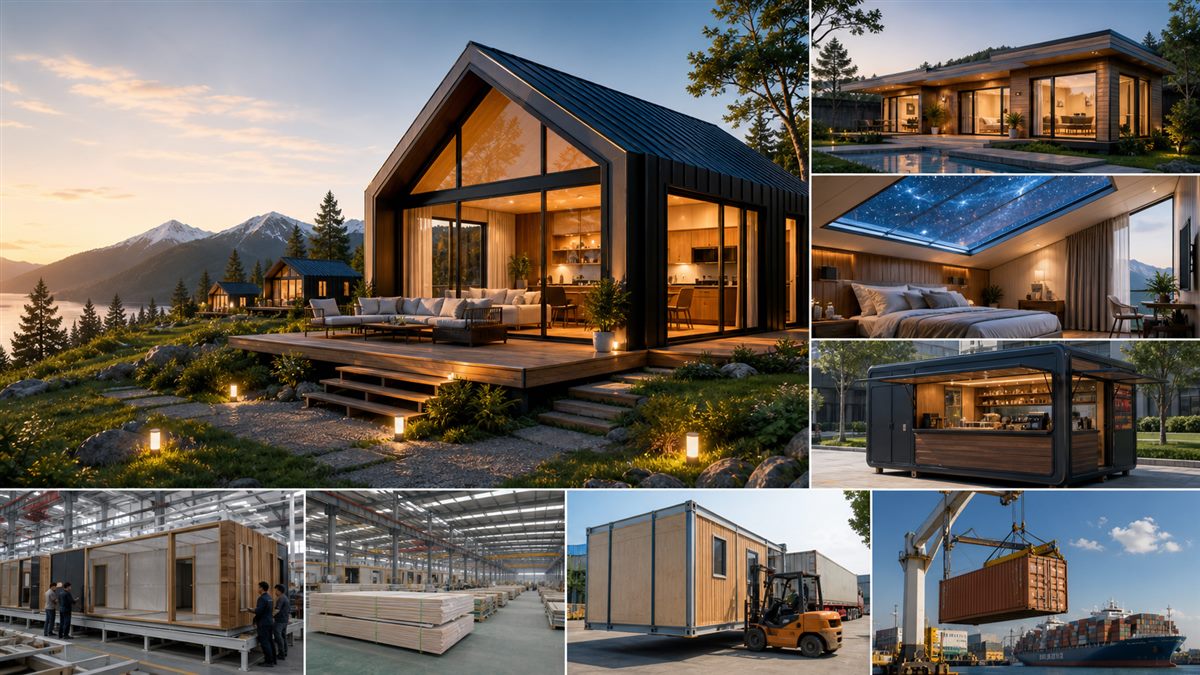
The foundation of modular installation lies in standardized engineering. Each wooden house is designed as a system of prefabricated components—walls, floors, roofing, and interior modules—that are manufactured with strict dimensional accuracy. This ensures that all parts fit together seamlessly during overseas installation, reducing errors and rework on-site.
2. Efficient Logistics and Container-Based ShippingA strong export installation strategy begins with optimized logistics. Modular wooden houses are typically packed into standard shipping containers, allowing for cost-effective global transportation. Every component is labeled, protected, and organized for direct assembly upon arrival, significantly improving installation efficiency in foreign markets.
3. Fast Installation with Minimal Construction DisruptionOne of the biggest advantages of modular systems is speed. Compared to conventional construction, installation time can be reduced by more than 50–70%. With pre-engineered connection systems and simplified assembly procedures, most structures can be installed within days, enabling developers to launch projects faster and generate earlier returns.
4. Flexible Adaptation to Global Site ConditionsDifferent regions require different structural responses. Whether in humid tropical climates, cold mountainous areas, or coastal environments, modular wooden house systems can be customized to meet local environmental and regulatory requirements. This adaptability ensures long-term durability and compliance across multiple international markets.
5. Cost Optimization and Investment EfficiencyBy reducing on-site labor requirements and shortening construction timelines, modular installation significantly lowers overall project costs. For investors in hospitality and tourism, this translates into faster operational readiness, reduced financial pressure, and improved return on investment.
Conclusion
Modular Wooden House Export Installation is not just a construction method—it is a global infrastructure strategy. It enables developers, investors, and operators to scale projects efficiently across borders while maintaining quality, sustainability, and cost control. As demand for flexible and eco-friendly accommodation continues to grow, modular installation stands at the forefront of the future of international building solutions.
Prefab modular home visual reference
 Scan WeChat for quick project support