
In recent years, the global construction industry has been undergoing a significant transformation. As sustainability, speed, and cost efficiency become top priorities, modular prefabricated housing export manufacturers are emerging as key players in international building supply chains.
From eco-resorts in Southeast Asia to remote eco-lodges in Europe and luxury desert camps in the Middle East, modular prefabricated housing is redefining how buildings are designed, manufactured, and delivered across borders.
What Is a Modular Prefabricated Housing Export Manufacturer?
A modular prefabricated housing export manufacturer is a company that designs, produces, and exports prefabricated building systems—typically modular houses, cabins, or accommodation units—built in factories and assembled on-site in international markets.
Unlike traditional construction companies, these manufacturers focus on:
Factory-based production systems
Modular and standardized building design
International shipping and logistics
On-site installation support overseas
Compliance with multiple building codes
In essence, they deliver not just buildings, but complete construction solutions.
Why Modular Prefabricated Housing Is Growing Globally1. Rising Demand in Tourism and Hospitality
The global tourism industry is rapidly expanding, especially in:
Eco-resorts
Glamping sites
Boutique hotels
Nature-based retreats
These sectors require fast-deployable, visually attractive accommodation solutions—exactly what modular housing provides.
2. Faster Construction and Deployment
Traditional construction projects can take months or even years. In contrast, modular prefabricated housing offers:
Factory pre-production
Reduced on-site construction time
Rapid installation and commissioning
This speed is critical for investment-driven hospitality projects.
3. Sustainability and Green Building Trends
Governments and developers worldwide are prioritizing:
Low-carbon construction
Reusable building systems
Reduced construction waste
Modular housing aligns perfectly with these environmental goals.
4. Cost Efficiency and Investment FlexibilityFor international investors, modular housing offers:
Predictable construction costs
Scalable project expansion
Lower labor dependency
This makes it ideal for phased development strategies.
Core Capabilities of a Professional Export Manufacturer1. Engineering and Design Capability
A strong manufacturer must be able to design structures that meet:
Wind resistance standards
Thermal insulation requirements
Seismic safety regulations
Local building codes in different countries
2. Factory-Based Production System
High-quality manufacturers rely on:
Standardized production lines
Precision-cut structural components
Quality control systems
Durable prefabricated materials
This ensures consistency and reliability.
3. Modular Transportation Design
Export-ready housing must be optimized for logistics:
Container-compatible packaging
Disassemblable modular units
Shock-resistant transport structure
Efficient loading design
This reduces shipping costs and risks.
4. International Installation Support
A professional export manufacturer often provides:
Installation manuals and drawings
Remote technical guidance
On-site engineering support
Training for local construction teams
This ensures successful project delivery.
Key Application Scenarios Worldwide
Eco Resorts and Hotels
Used in:
Island resorts
Mountain retreats
Forest eco-hotels
Glamping and Outdoor Tourism
Popular for:
Luxury camping cabins
Safari lodges
Desert camps
Residential and Private Projects
Including:
Vacation homes
Secondary residences
Private garden cabins
Commercial and Cultural Spaces
Such as:
Visitor centers
Pop-up retail spaces
Exhibition pavilions
How to Choose a Reliable Export Manufacturer
1. Proven International Project Experience
Look for manufacturers with:
Completed overseas installations
Multi-country project references
Familiarity with global standards
2. Strong Modular Engineering Design
Good manufacturers optimize:
Structural stability
Transport efficiency
Assembly simplicity
3. Production Capacity and Quality Control
Key indicators include:
Factory scale
Material sourcing system
Consistent product quality
4. Full-Service Export Capability
A reliable partner should offer:
Design
Manufacturing
Logistics coordination
Installation support
Future Trends in Modular Prefabricated Housing Export Industry1. Global Standardization
Building systems will increasingly follow unified modular standards.
2. Smart and Integrated Housing Systems
Future modular homes will include:
Smart lighting systems
Energy management systems
IoT-based controls
3. Expansion of Eco-Tourism Infrastructure
Demand will continue growing in:
Sustainable resorts
Nature-based tourism
Low-impact accommodation
4. Shift from Product Export to Solution ExportManufacturers are evolving from simple suppliers to:
Full project solution providers
Turnkey resort developers
Integrated construction partners
Conclusion: A Key Driver of Global Sustainable ConstructionThe modular prefabricated housing export manufacturer is no longer just a builder—it is a global enabler of modern tourism, sustainable living, and fast-deployment infrastructure.
For international investors and developers, choosing the right manufacturer means more than purchasing a structure. It means securing:
Faster project delivery
Lower construction risk
Higher operational efficiency
Stronger long-term returns
As global demand continues to rise, modular prefabricated housing exporters will play an increasingly important role in shaping the future of sustainable and flexible construction worldwide.
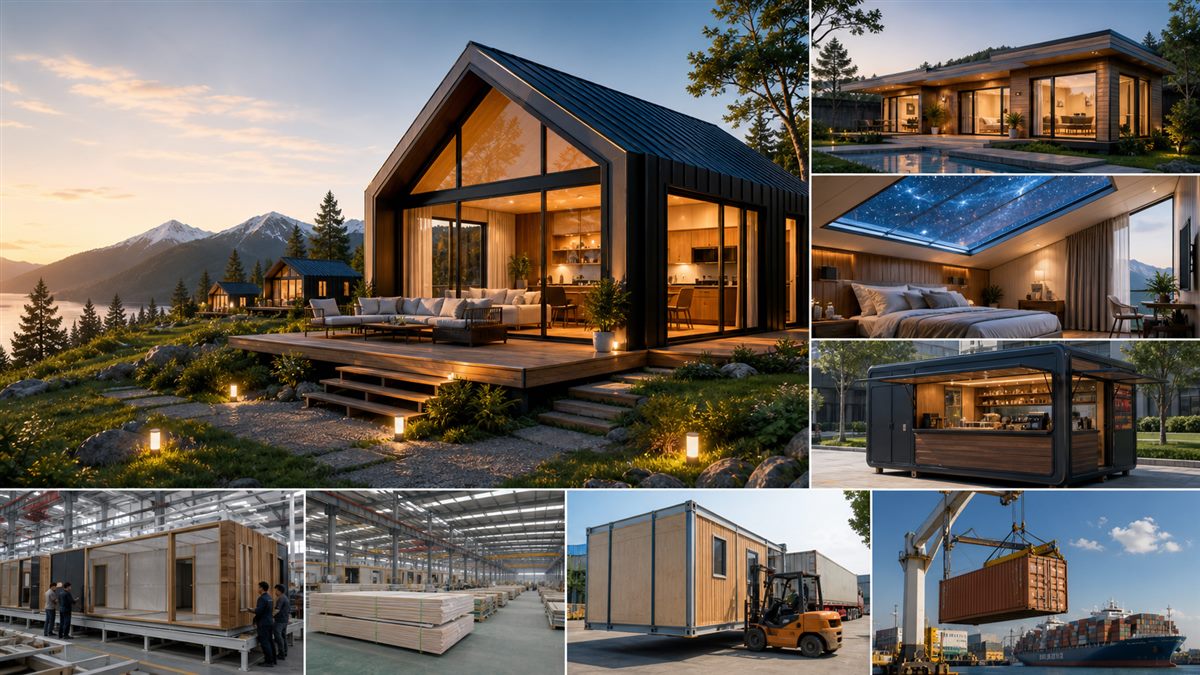
Prefab modular home visual reference
 Scan WeChat for quick project support