
In the rapidly evolving global construction industry, prefabricated buildings have become a major trend due to their efficiency, sustainability, and cost advantages. Behind this growing demand, the role of prefabricated building distribution is becoming increasingly important, connecting manufacturers with developers, investors, and end users across different markets.
This article explores what prefabricated building distribution means, how it works, and why it is a key driver in the expansion of modular construction worldwide.
1. What Is Prefabricated Building Distribution?
Prefabricated building distribution refers to the business model in which distributors act as intermediaries between manufacturers and project buyers. These distributors are responsible for:
Marketing prefabricated building systems
Connecting suppliers with developers or investors
Providing project consultation and solutions
Managing regional sales channels
In simple terms, they help bridge the gap between factory production and real-world construction projects.
2. Why Prefabricated Buildings Need Distribution Channels
Unlike traditional building materials, prefabricated structures involve integrated systems, including:
Structural modules
Interior finishing components
Installation systems
Transportation and logistics coordination
Because of this complexity, direct factory-to-client sales are often not enough. Distribution channels help:
✔ Expand market reach
Manufacturers can enter international and regional markets more efficiently.
✔ Improve customer service
Distributors provide localized support and communication.
✔ Simplify project execution
Clients receive integrated solutions instead of fragmented supply chains.
3. Key Roles of a Prefabricated Building Distributor
A professional distributor plays multiple roles in the industry:
1. Market Developer
Identifies potential clients such as:
Tourism resort investors
Real estate developers
Government infrastructure projects
Eco-camp operators
2. Solution Provider
Instead of selling only products, distributors often provide:
Project planning consultation
Design coordination
Budget optimization solutions
3. Logistics Coordinator
Handles:
Transportation planning
Export documentation
On-site delivery coordination
4. Project Support Partner
Supports clients during:
Installation phases
Technical troubleshooting
After-sales service
4. Advantages of Prefabricated Building Distribution
A strong distribution system brings value to all parties:
For manufacturers:
Faster market expansion
Reduced marketing cost
Stable order flow
For clients:
Easier communication
Localized support
Faster project delivery
For investors:
More reliable project execution
Better cost control
Reduced construction risks
5. Industry Trends in Prefabricated Building Distribution
The global market is evolving rapidly, with several key trends:
1. Digital Sales Channels
Online platforms and B2B marketplaces are becoming major distribution tools.
2. Integrated Solutions
Distributors now offer full-package services:
Design + manufacturing + installation
3. Global Expansion
Demand is growing in:
Tourism resorts
Eco-lodges
Remote housing projects
4. Sustainability Focus
Eco-friendly materials and low-carbon construction systems are becoming standard requirements.
6. Challenges in the Distribution Industry
Despite strong growth, the industry also faces challenges:
Complex international logistics
Differences in building regulations
Quality consistency control
Communication gaps between stakeholders
After-sales service coordination
Successful distributors must be able to manage both technical and commercial aspects effectively.
Conclusion: Distribution Is the Key Link in Modular Construction
Prefabricated building distribution is more than a sales channel—it is a critical ecosystem connector in the modern construction industry.
The most successful distributors are those who can combine:
Market insight + technical understanding + project coordination capability
As prefabricated construction continues to expand globally, distribution networks will play an even more important role in shaping the future of sustainable and efficient building solutions.
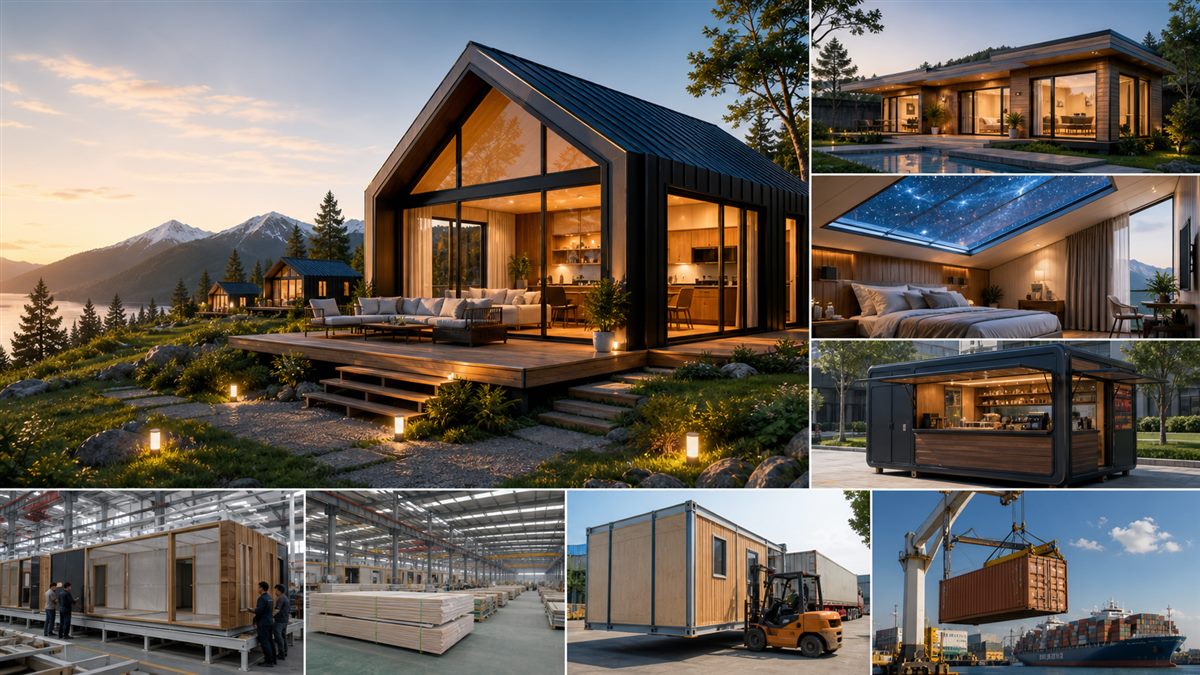
Prefab modular home visual reference
 Scan WeChat for quick project support